KEYWORDS: Landing Page Optimization E-commerce SEO strategy conversion rate optimization (CRO) High-Converting Automotive Landing Pages
E-commerce SEO: Landing Page Optimizations for the Automotive Industry
SEO
|
January 19, 2026
The market of online auto parts and automotive accessories sales is very competitive; therefore, simply having an online store is no longer enough in 2026. With millions and thousands of users searching for auto products and services on a regular basis, e-commerce SEO strategy has become a critical move for increasing visibility, engaging buyers, and finally boosting conversion rates.
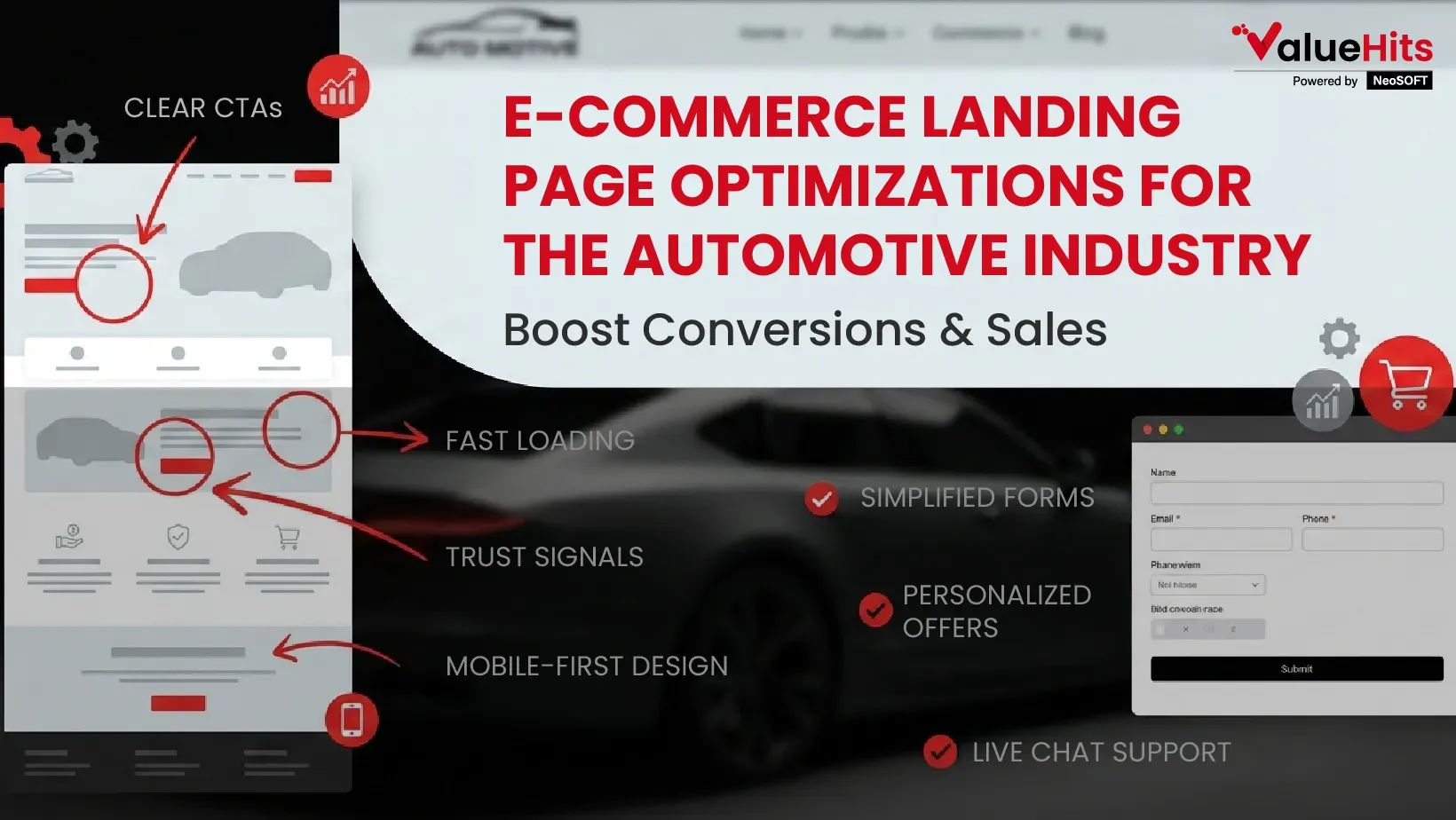
So, if you are running an automotive e-commerce site, this comprehensive guide will show you how to optimize automotive landing pages, improve conversion rate optimization (CRO), use powerful call-to-action (CTA), tweak content effectively, and implement product page schema markup for an excellent SEO impact.
Why Landing Page Optimization Matters in Automotive E-commerce?
Automotive shoppers behave differently while online shopping than the general customers. They are in search of specific information, right from OEM part numbers to compatibility details and performance specs. Therefore, a poorly optimized landing page can cause confusion, resulting in abandoned carts. This is where landing page CRO strategies come into play.
Entity SEO focuses on helping Google understand:
- Hero section to focus on the main keyword of the page
- Vehicle-value words that builds trust with clear information
- Guides customers towards “buying” decisions even if they have not made up their mind
- Top navigation has clear action oriented and limited links only
Key Factors of High-Converting Automotive Landing Pages
1. Clear and Compelling Headlines
Your headline is the first thing that any visitors see; therefore, make it relevant to what the users are searching for, whether it is “performance brake pads” or “oil filter for Honda Civic.”
Important Tips:
- include your main keyword in the H1, e.g., “Best Automotive Brake Pads for High-Performance Cars.”
- The keyword must be action-oriented and benefit-driven for both sides
- Align the hero section on top with paid ads content and your audience’s search intent
2. Engaging Visuals That Sell!
What are these? High-quality images and videos of your automotive products are more than pretty additions that look aesthetic, they reduce uncertainty and elevate the buyer’s confidence.
Visual optimization quick tips:
- Use multiple angles (360-degree videos)
- Include size comparisons, side by side
- Add zoom functionality
- Use ALT tags with your targeted keywords
3. Influential Content with Relevant Keywords
Automotive buyers always search for products or services with a specific intent, whether that’s “discounted performance auto parts” or “car accessories near me. So, your landing page has to cater to those search terms with accurate information, mainly benefit-focused content.
Content ideas specifically for automotive landing pages:
- Key features & benefits of each part
- Compatibility and fitment information
- Installation instructions & tips
- Customer testimonials and reviews
Make sure you integrate high search volume keywords such as “auto parts online, “car accessories sale, “performance upgrade parts, and “automotive replacement parts,” but make sure your copy looks organic and natural to read. Do not overstuff keywords.
4. Strategic CTA (Call-to-Action) Placement
Your CTA buttons are crucial and are true conversion drivers; there’s a reason why a generic “Buy Now” simply doesn’t cut it. Therefore, impactful CTAs truly influence decision-making by appearing at the right spots on a landing page. For visitors who haven’t clicked yet, interested but still undecided, the goal is to reduce this pressure while peaking relevance.
This is where low-commitment, high-value CTAs work best, such as splitting the page providing tailored options, a reworded “Get Your Car’s Value” for sellers, and a credit approval link for buyers, which guides them to the next step with confidence.
These are some of the best CTA practices:
- Always use action-oriented language, e.g., “Grab Your Product-X At Discounted Price.”
- Offer urgency and sell that urgency, use relevant phrases, such as “Limited Stock,” “Free Shipping Today Only.”
- Add value links if they are unsure of their goals. “Thinking about partnering with us?”
- If CTA’s are not clicked, but they are scrolling means users are stuck. You can try segmenting buyers by funnels or add broader appeal actions that are not a single product oriented.
Content Tweaks That Drive Relevance & Engagement
Personalization & Dynamic Messaging
If your platform supports personalization, then show relevant content based on:
- User search terms
- Vehicle model
- Browsing history
Examples:
- “Parts for Honda Civic LX”
- “You viewed performance brakes, save 20% today!”
Use Social Proof
Car enthusiasts are always in search of customer validations and feedback. Add customer ratings, reviews, and even user-generated photos. Videos work the best to show product usage, manufacturing process or to make sure of quality.
Impactful social proof elements such as:
- Star ratings
- Short user testimonials
- Verified review summaries
- Photos of installed products
Integrating Product Page Schema Markup for SEO Growth
This is one of the underestimated techniques in automotive e-commerce: structured data, specifically product schema markup. Schema markup is known to help search engines understand your product data and display better listings with the help of rich snippets.
Why Schema Matters?
With a schema for automotive parts, a search engine can display:
- Price
- Stock status
- Ratings & reviews
- SKU and warranty information
- Vehicle compatibility
How to Add Product Schema Markup
Use JSON-LD format and include the following key properties for each product:
<script type="application/ld+json">
{
"@context": "https://schema.org/",
"@type": "Product",
"name": "Performance Brake Pads",
"image": "https://yourdomain.com/images/brakepads.jpg",
"description": "High-performance brake pads for sports cars",
"sku": "BP12345",
"brand": {
"@type": "Brand",
"name": "AutoTech"
},
"offers": {
"@type": "Offer",
"url": "https://yourdomain.com/performance-brake-pads",
"priceCurrency": "USD",
"price": "129.99",
"availability": "https://schema.org/InStock"
},
"aggregateRating": {
"@type": "AggregateRating",
"ratingValue": "4.7",
"reviewCount": "328"
}
}
</script>
A/B Testing: The Secret to Continuous Improvement
Optimizing the landing page is not a one-time task; you need to keep monitoring and make changes frequently when required.
To stay ahead, use A/B testing to experiment with:
- Different headlines
- CTA text and colors
- Product descriptions
- Page layouts
You can easily track different metrics, such as bounce rate, time on page, and conversion percentage, to see what relates to your targeted automotive shoppers.
Wrapping It Up - Optimize With Intent!
The automotive e-commerce area is booming; however, only brands that are always on their toes and optimize for user intent will thrive. When you focus on landing page CRO, crafting compelling CTAs, improving content structure, and implementing product page schema markup, you can create landing pages that not only rank well but also convert at high rates.
With all the mentioned strategies above, your automotive e-commerce landing page isn’t just optimized, it’s ready to dominate search results and maximize conversions. For best results you can hire SEO experts from Valuehits, one of the best digital marketing agencies in India.
AI-Powered Image SEO: Automating Alt Text, Optimization & WebP
September 23, 2026
Yes, AI technology can automate several image SEO tasks, including creating alt text, optimizing
How to Make Product Snippets Show Up in Google Search Results
September 17, 2026
Search for running shoes and look at the results.
ChatGPT Ads: Secrets to Find Buyers & Grow Sales
September 9, 2026
Have you heard the big news? You can now show your business inside AI chats.

Hardik Mody
Senior Manager - Digital Marketing atValueHits
Hardik Mody is a Senior Manager in Digital Marketing. He plans and coordinates the marketing activities of ValueHits, a full-service Digital Marketing Agency in Mumbai, India. With his experience and Expert knowledge in the field, he identifies potential customers and develops marketing campaigns. Also, he is efficient enough to meet the client’s requirements and well-organized in handling multiple tasks.