KEYWORDS: Image SEO Automate Image SEO AI-Powered Image SEO Image Optimization
AI-Powered Image SEO: Automating Alt Text, Optimization & WebP
SEO
|
September 23, 2026
Yes, AI technology can automate several image SEO tasks, including creating alt text, optimizing file names, identifying oversized images, resizing files, and converting images to WebP. There are many repetitive processes involved in image optimization that can be automated by using AI, such as creating alt text, optimizing file names, identifying any images that are too big, resizing the images, and converting them into WebP from any other previous format. By doing so, organizations will be able to optimize their image portfolio much faster and more effectively.
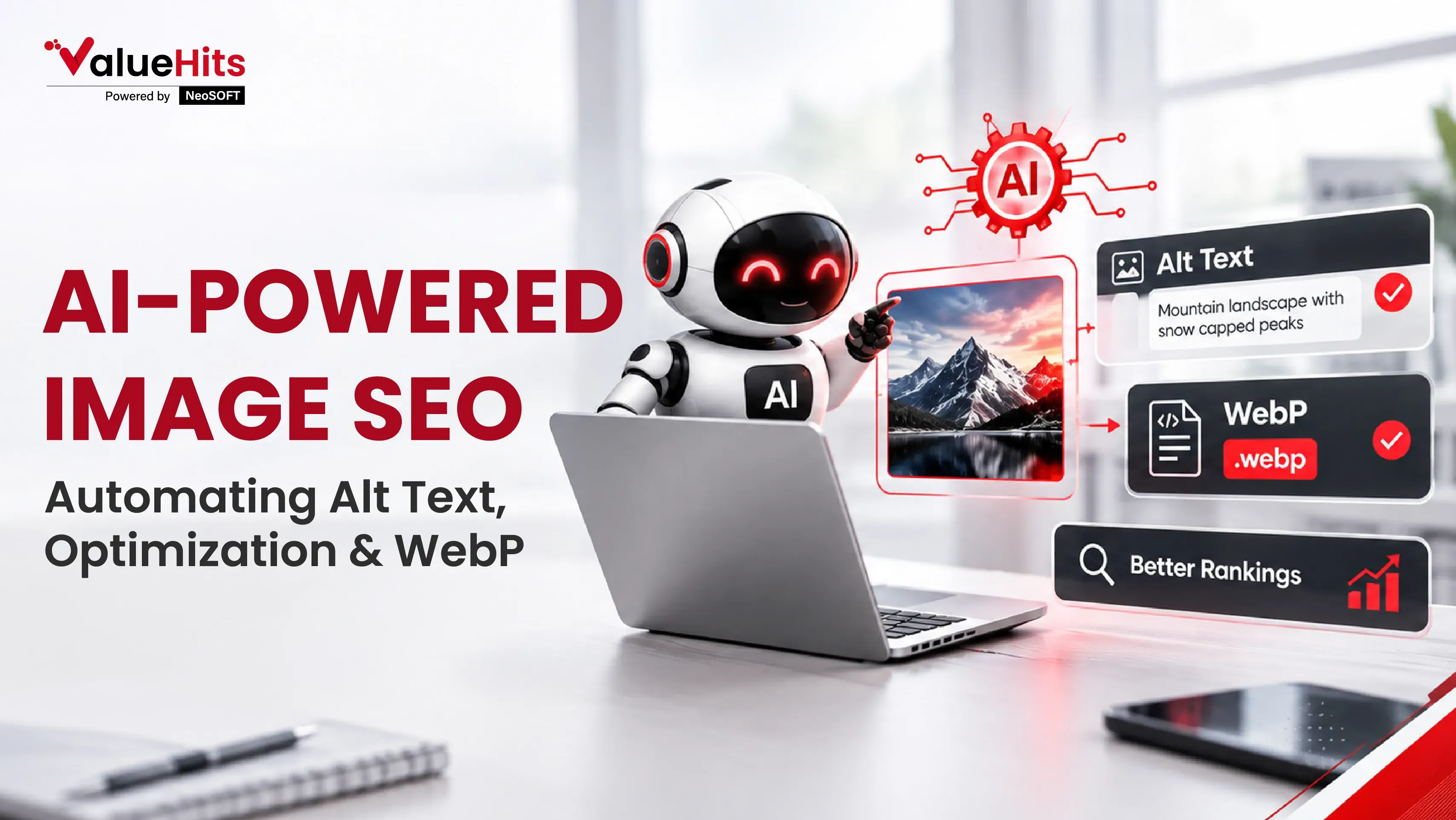
Images are not only visuals on the webpage anymore; they may affect visibility in Google Images, user experience, accessibility, and page speed. AI-powered image SEO enables businesses to streamline image optimization without manually analyzing each image individually.
What Is Image SEO?
Image SEO is the method of optimizing images used on websites such that search engines can comprehend and index them effectively without adding unnecessary delays to the page’s load time.
Some of the aspects of Image SEO include:
- Descriptive filenames
- Alt text
- Image compression
- Correct sizing
- Modern file formats like WebP
- Responsive image delivery
- Image sitemaps where applicable
- Relevant contextual information
Google advises that you use descriptive filenames and alt texts as these will help it understand what your image means. Alt texts also help with accessibility.
Alt Text Generation by Artificial Intelligence
When it comes to describing multiple images with alt texts, it is often a time-consuming process. Using image recognition capabilities of artificial intelligence, an image could be analyzed and described according to its objects, environment, and context.
Thus, instead of writing:
Alt text: image123.jpg
One can receive the following suggestion:
Alt text: Modern office team collaborating around a conference table
The key takeaway is that AI-driven alt text needs to be verified rather than accepted without scrutiny. This text should correctly describe the visual element and relate to the webpage content as well. Moreover, one should not stuff keywords.
In the case of e-commerce sites, AI will detect certain attributes of the product such as its type, color, style, and characteristics visible on the image.
AI Can Help in Choosing an SEO-friendly Filename for Images
The filename of images is another context clue. The filename like IMG_8293.jpg has no clue at all, while a filename such as blue-running-shoes. webp gives search engines some context clues.
AI will help you by analyzing the image and recommending the appropriate filename for the image, which could be something like the following:
topic + attribute + format
This is especially helpful in situations where a website has thousands of images uploaded by various groups.
Filenames, however, should still remain descriptive and natural. Placing keywords simply to boost SEO is unnecessary clutter.
Automated Image Compression and Resizing
Heavy images can contribute to increasing the weight of pages and loading times. According to Google, images can make up a substantial portion of the page size and therefore should be optimized to provide a faster experience.
Optimization platforms based on AI can spot images that are oversized and suggest or automatically set proper sizing and compression levels.
For instance, an initial image can be 4000 pixels wide while the website displays it in 1200 pixels. An automated process can resize the image to a proper size and compress it without compromising visual quality.
AI can also assist in deciding which images should receive priority optimization, such as heavy hero images that could affect the LCP of a page.
Convert Images to WebP or AVIF with AI Automation
Some of the most practical use cases for automation are those that involve the conversion of images to new formats like WebP. Automatically convert and serve images in an appropriate modern format, such as WebP or AVIF, where supported and beneficial.
This is supported by Google Search and all major browsers and offers small file sizes with good visual quality.
Rather than having to open and convert each JPEG and PNG image manually, automation allows you to:
1. Scan the website's image repository.
2. Locate images that can be converted.
3. Convert the compatible ones into WebP format.
4. Compress the newly created images.
5. Create the responsive variations required.
6. Serve optimized versions instead.
7. Maintain fallback options wherever needed.
This is particularly useful for websites that have large media libraries, such as ecommerce sites, publishing sites, and property websites.
AI Can Audit Image SEO at Scale
Besides optimizing the images, AI can help in identifying issues on the entire website.
The automatic image SEO audit tool will be able to identify:
- No alt text provided
- Templates without filename
- Too big images
- Wrong dimensions
- Non-compressed images
- Old format
- Images that are hard to discover
- Inconsistent image optimization templates
- No image sitemap
- Broken image URL
- Images causing performance issues
This will help marketers create a list of problems that need to be fixed by using automation. The focus will first be given to important landing pages, product pages, and other high-volume content.
Why AI-Powered Image SEO Matters for AEO and AI Search
Image SEO is also becoming relevant to the broader AI search ecosystem. Modern search systems increasingly combine textual understanding with computer vision and multimodal capabilities.
AI systems can interpret visual content, but contextual signals such as filenames, alt text, captions, surrounding content, and structured data can provide additional information about an image.
For brands investing in AEO and GEO, this creates another opportunity: make visual assets easier for search systems to understand.
A well-optimized image therefore supports more than traditional Google Images visibility. It contributes to a website's overall machine-readable content ecosystem.
Essential Tools and Technologies for AI-Powered Image SEO
Some of the tools and technologies that could assist in image SEO using AI are as follows:
- Tools for AI Image Recognition: It is a great tool to generate alt tags by analyzing the content right from the images.
- Image Optimization Tools: This is a tool that helps to compress images to reduce their size without affecting the quality.
- WebP and AVIF converters: With this tool, you can automatically convert JPG and PNG files to advanced image formats and more.
- CDN and Image Optimization API: Deliver optimized images according to the device and browser being used.
- SEO Audit Tools: These are the basic tools that help to identify any issues in the images, such as lack of alt tags, huge image files, and broken image links.
The Human Factor Is Still Relevant
AI is capable of automating the process of image SEO, but automation should not be synonymous with the elimination of human control.
AI may misinterpret an image, miss something crucial about the product in question, or create a caption that will not fit the page's concept. The human check is especially relevant when it comes to commercially, editorially, or accessibility-wise significant images.
The best strategy here would be a combination of both - AI and the human check.
Create an Efficient Image SEO Workflow
Using AI, image optimization moves away from a checklist-based approach and towards a repeatable process. From generating alt text and filenames through to the process of resizing, compressing, and converting images into WebP, automation allows for less repetition and helps companies to maintain high standards of optimization.
The true value of automating this process for companies with large websites does not just lie in optimizing images more efficiently. It lies in having a repeatable process that ensures every new image adheres to SEO, accessibility, performance, and AI search criteria.
With search becoming more and more visual and automated, taking images seriously as searchable content gives companies another opportunity to increase their visibility.
For businesses with large websites having numerous high resolution images, making image optimization a consistent part of their SEO strategy can be challenging. ValueHits can help you.
Talk to our SEO experts and get to know how image SEO with AI-powered optimization can improve their website performance on mobile & desktop version, accessibility, and visibility across Google and AI search platforms.
AI-Powered Image SEO: Automating Alt Text, Optimization & WebP
September 23, 2026
Yes, AI technology can automate several image SEO tasks, including creating alt text, optimizing
How to Make Product Snippets Show Up in Google Search Results
September 17, 2026
Search for running shoes and look at the results.
ChatGPT Ads: Secrets to Find Buyers & Grow Sales
September 9, 2026
Have you heard the big news? You can now show your business inside AI chats.

Hardik Mody
Senior Manager - Digital Marketing atValueHits
Hardik Mody is a Senior Manager in Digital Marketing. He plans and coordinates the marketing activities of ValueHits, a full-service Digital Marketing Agency in Mumbai, India. With his experience and Expert knowledge in the field, he identifies potential customers and develops marketing campaigns. Also, he is efficient enough to meet the client’s requirements and well-organized in handling multiple tasks.